

Pre-requisites
Before you start, make sure the following requirements are met:- Chat is available on Web V3, iOS v4.0.3+, and Android v4.1.7+.
- The Chat feature must be enabled for your organization. Contact your Customer Success Manager or email support@zuper.co to enable it.
- Your access and actions depend on your role (Admin, Team Lead, Field Executive).
Getting Started: Sidebar (Web) / Home (Mobile)
The Sidebar on web and the Home screen on mobile are where all conversations live. From here, you can:- View all conversations, including Direct Messages, Channels, and Pinned conversations.
- Filter conversations by Unreads, Recents, Threads, or Mentions.
- Start a new Direct Message or Channel.
- Search across Messages, Users, and Channels.
- Web
- Mobile
Direct Messages (DMs)
Direct Messages are one-to-one conversations between users. Who can start DMs:- Field Executives and Team Leads can start DMs with their own team members.
- Admins can start DMs with any user.
Note: Field Executives and Team Leads can view and reply to DMs initiated by Admins.
- Web
- Mobile
Channels
Channels let teams collaborate in group conversations. Zuper supports three types of channels.1. General Channel
Every organization in Zuper automatically has a #general channel. All users are added to this channel by default. You can use the #general channel for:- Organization-wide announcements
- All-hands updates
- Information everyone needs to stay aligned
Note: The General channel cannot be archived.
2. Job-Specific Channels
Job-specific channels are created to centralize all communication related to a particular job. Each Job Channel is identified by a suitcase icon and is named after the job it belongs to. These channels are initiated from the Job Details page → Chat → Start Conversation and are automatically linked to the job.UI Update:
We’ve repositioned Job Channels into a dedicated section in the sidebar, separate from your other channels, for quicker access.
We’ve repositioned Job Channels into a dedicated section in the sidebar, separate from your other channels, for quicker access.
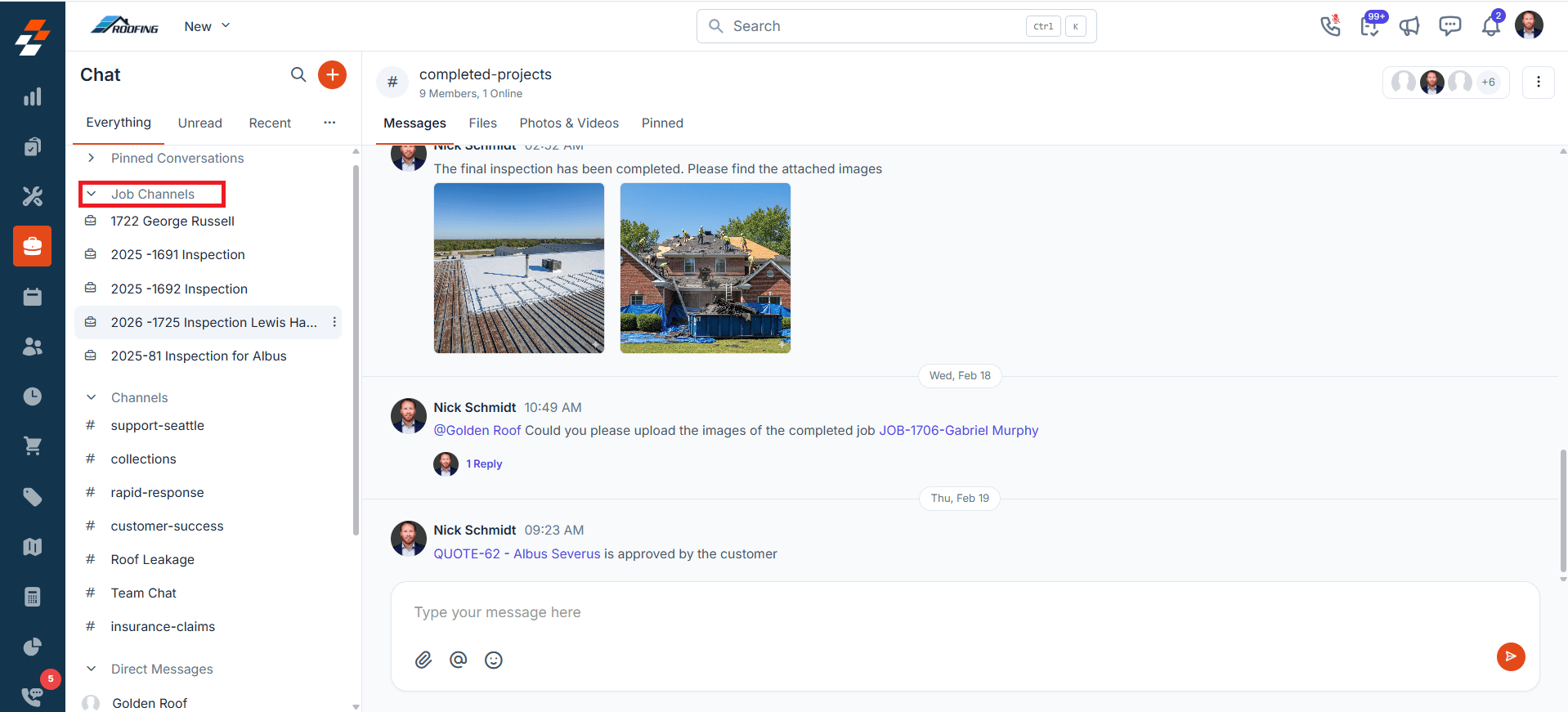
- Share photos, documents, and files related to the job in one place
- Exchange real-time updates as the job progresses
- Receive automated real-time job updates such as clock-in/out, quote acceptance/rejection status, invoice payments, status updates, and user assignment
- Keep all job-related discussions contextually tied to the job details
- Ensure clear communication between office teams and field technicians
Note: Any user with permission to view a job can create a Job Channel using the Start Conversation button. By default, assigned users, their Team Leads, and users configured in Job General Settings are automatically added as channel members.
3. Custom Channels
Custom channels are created to organize conversations around specific ongoing topics, teams, or projects. By creating a custom channel, teams can:- Keep conversations focused and relevant to a particular topic or project.
- Make it easier for members to find past discussions, files, and decisions.
- Collaborate efficiently with the right people, without unnecessary noise
- Maintain clarity as projects evolve or topics continue over time.
Creating Custom Channels
You can create a channel with one or more members for collaboration.- Web
- Mobile
Channel Managers
Channel Managers can control member access and help keep conversations organized. Channel Managers can:- Add or remove channel members.
- Assign other users as Channel Managers.
- Delete messages in the channel.
- #general channel:
All Admins are automatically assigned as Channel Managers. - Job channels:
The following users are automatically assigned as Channel Managers:- Team Leads of the assigned technicians.
- Primary Technician of the job.
- User who created the job (if enabled in Job General Settings).
- Any Admins added to the channel.
- Other channels:
The user who creates the channel is automatically assigned as the Channel Manager.
Note: Admins have Channel Manager permissions in any channel they join, even if not explicitly assigned.
Managing Conversation
You can manage conversations to stay focused and respond faster. Zuper lets you pin important conversations, mute distractions, and archive channels when they’re no longer active.Pin a Conversation
Pinning keeps it at the top in the “Pinned Conversations” for quick access.- Web
- Mobile
Set a Notification Preference
Updated You can control how you are notified for each channel. Zuper gives you two levels of control, a global preference for all channels, and a channel-level preference for individual channels.Global notification preference
Global notification preference
Your global preference sets the default notification behavior across all channels.
- Web
- Mobile
Web
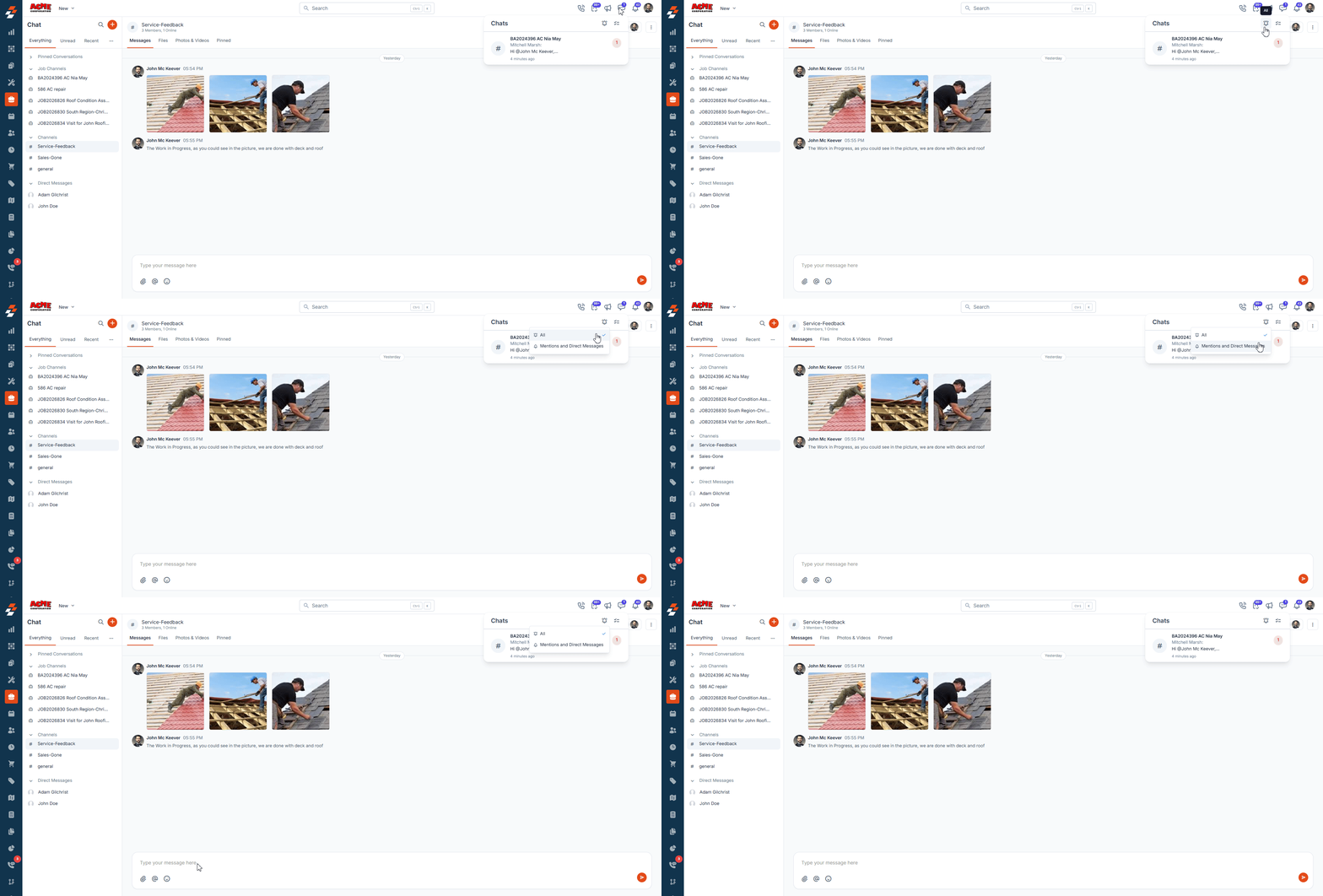
- Click the Chat icon in the top-right corner of the Header bar.
- Click the icon. A Notification Preference panel opens.
- Choose one of the following:
- All: You receive a notification for every message in every channel. This is the default.
- Mentions and Direct Messages: You are only notified when someone mentions you or sends you a Direct Message.
- Your preference is saved immediately.
Note: This setting applies to all channels where no channel-level preference has been set.
Channel-level notification preference
Channel-level notification preference
You can override your global preference for any individual channel. Channel-level preferences always take precedence over your global settings.
Note: Once a channel-level preference is set, it cannot be overridden by the global preference.
- Web
- Mobile
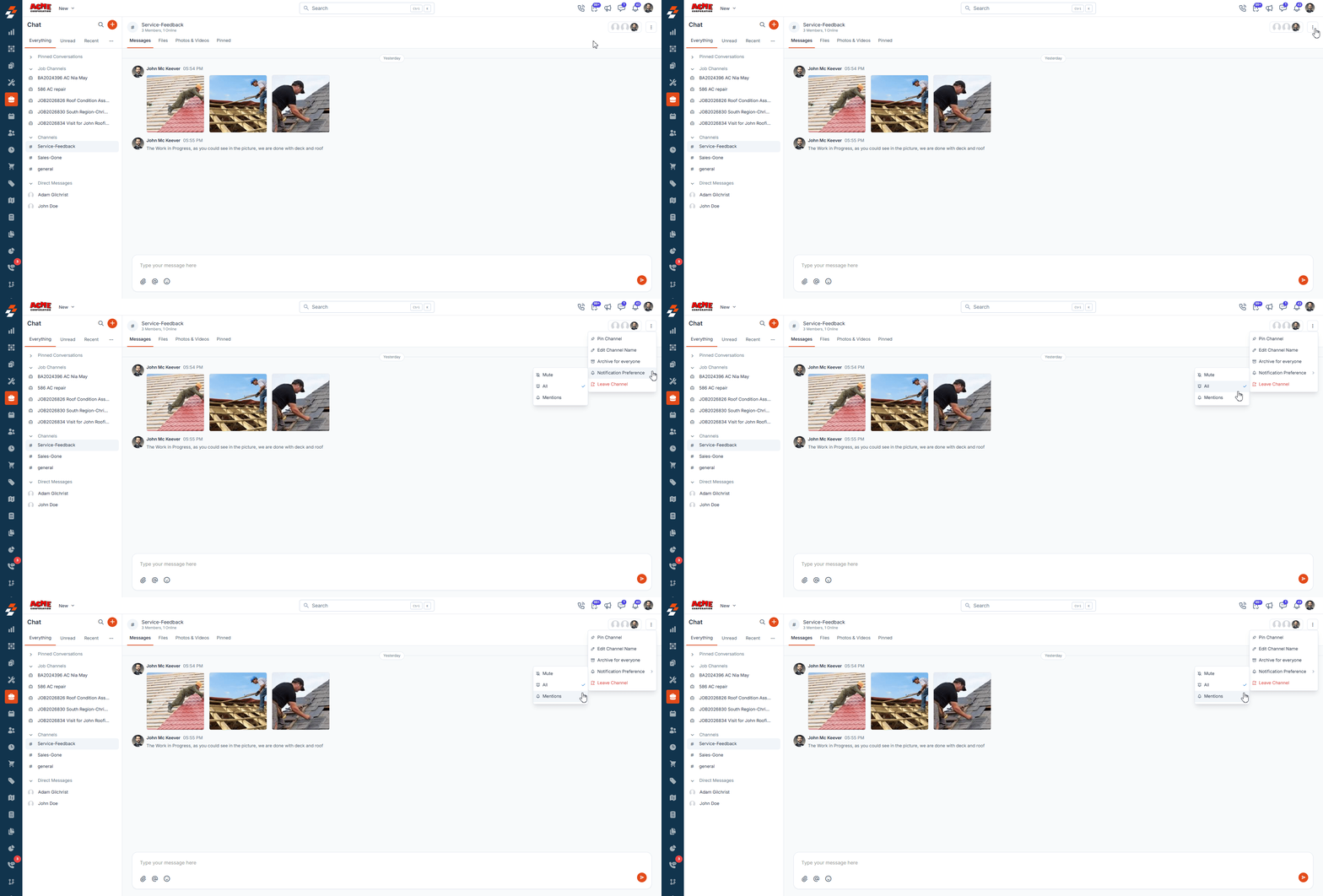
- Open the channel and click More actions (⋮) in the channel header.
- Select Notification Preference.
- Choose one of the following:
- All: You receive a notification for every message in this channel.
- Mentions: You are only notified when someone mentions you in this channel.
- Mute: You receive no notifications from this channel.
Archive a channel
Removes it from view for all users (searchable and restorable later).Note: DMs and the #general channel cannot be archived.
- Web
- Mobile
Sending and Managing Messages
Mentions
Tag users (@username) or entities (Jobs, Projects, Customers, Quotes, Invoices) — triggers notifications for user mentions; entity mentions link to details.- Web
- Mobile
Threads
Reply to a specific message to keep related discussions organized.- Web
- Mobile
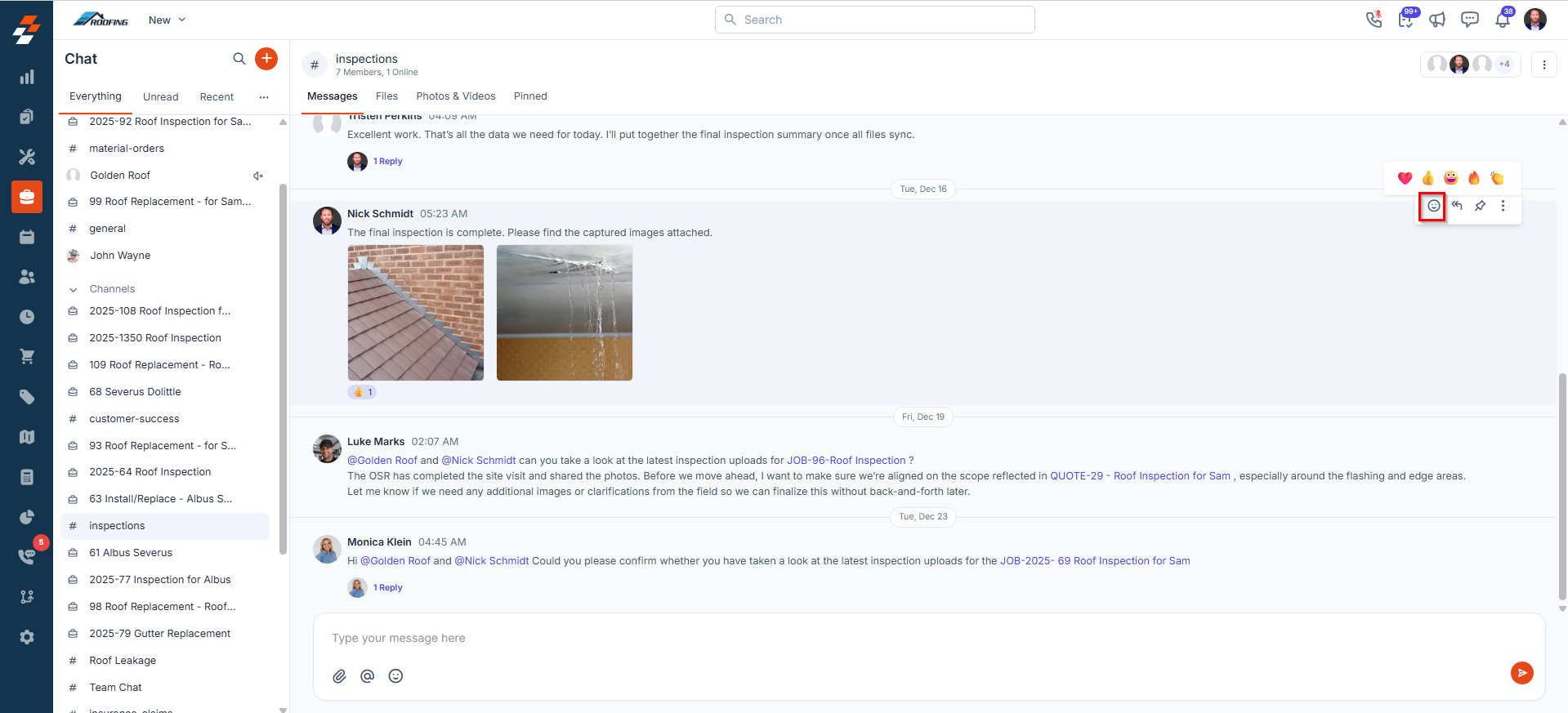
Reactions
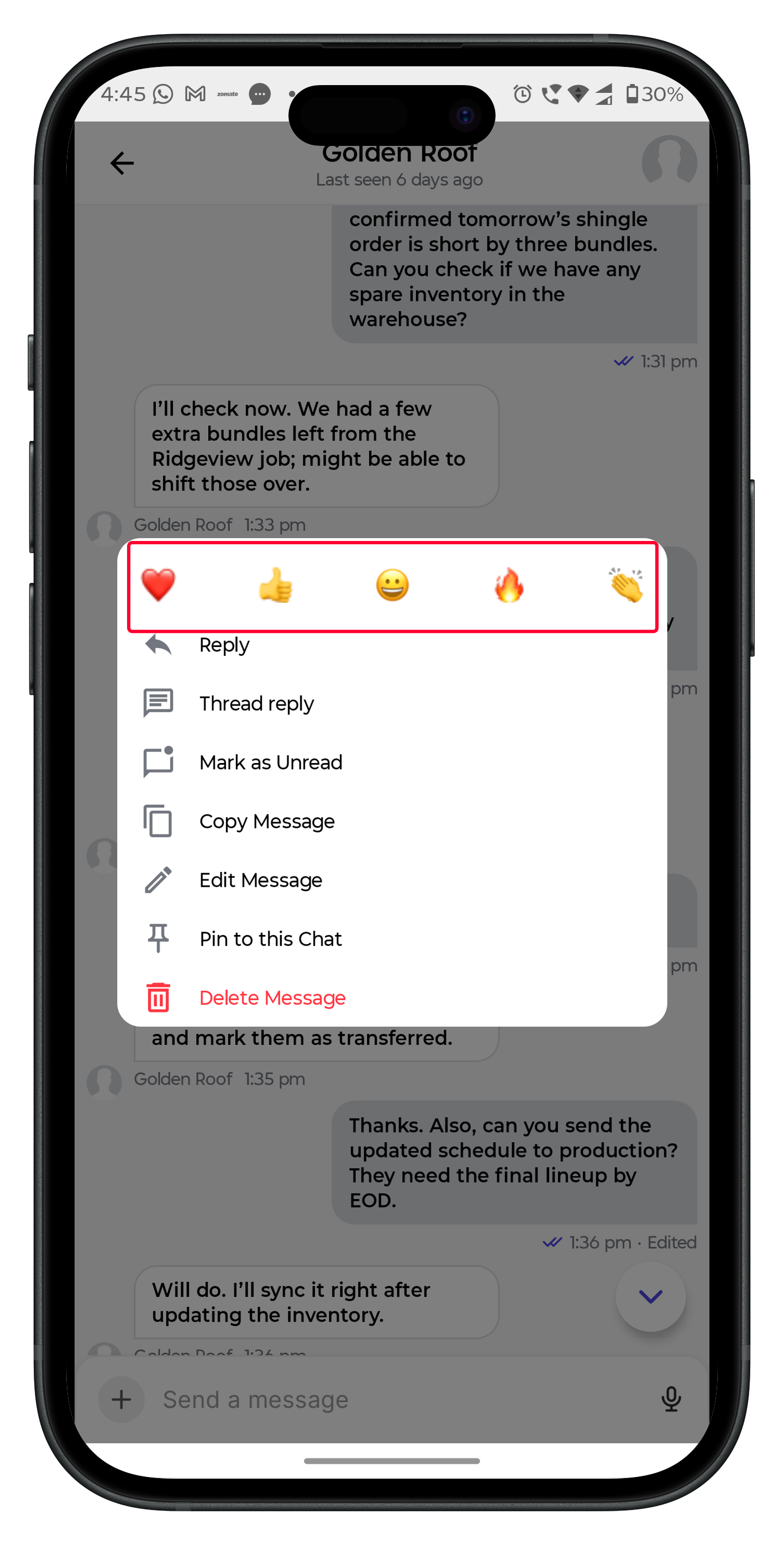
Add emojis to acknowledge messages quickly.- Web
- Mobile
Attachments
Share images, videos, documents — media appears in “Photos & Videos”; files in “Files” section.- Web
- Mobile
Pinning a message
Highlight key info within a conversation for easy reference.- Web
- Mobile
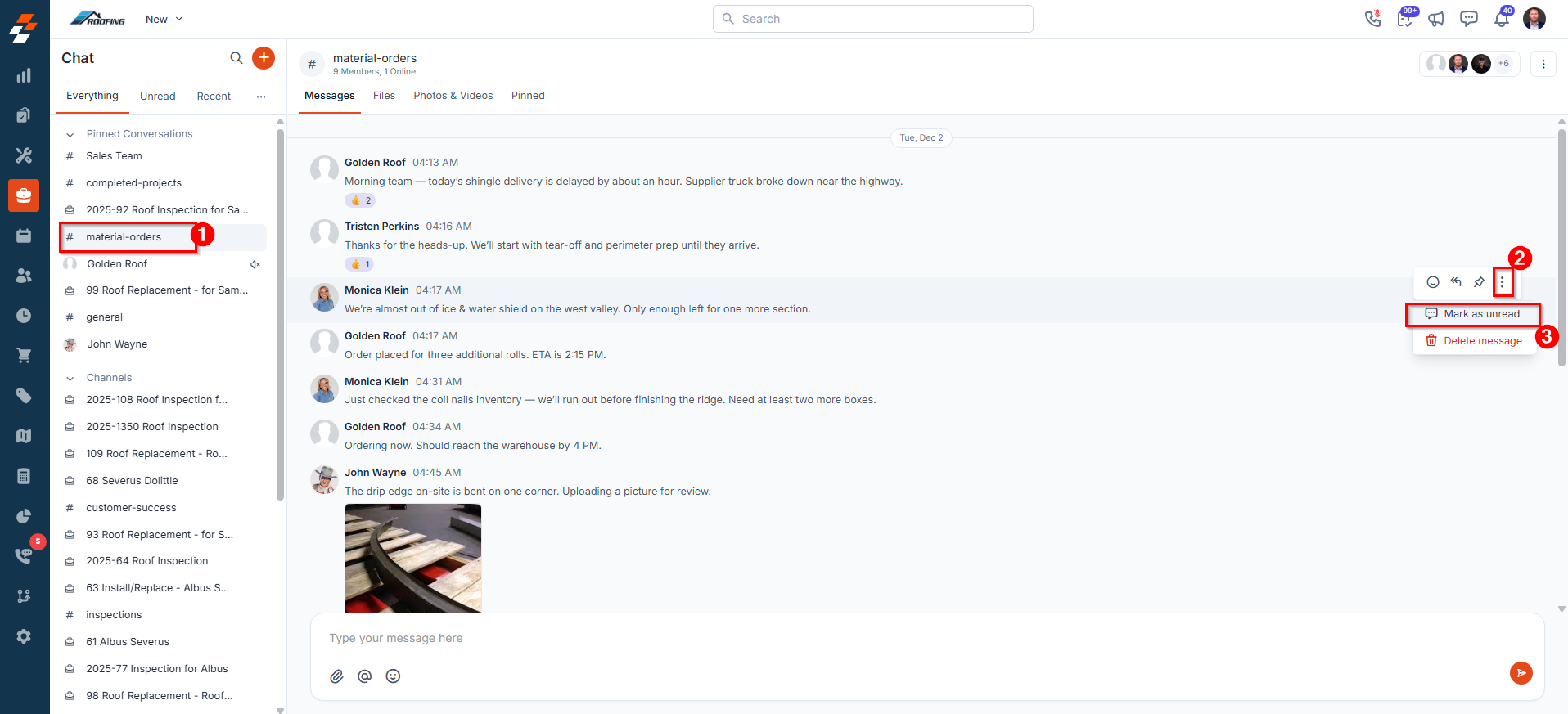
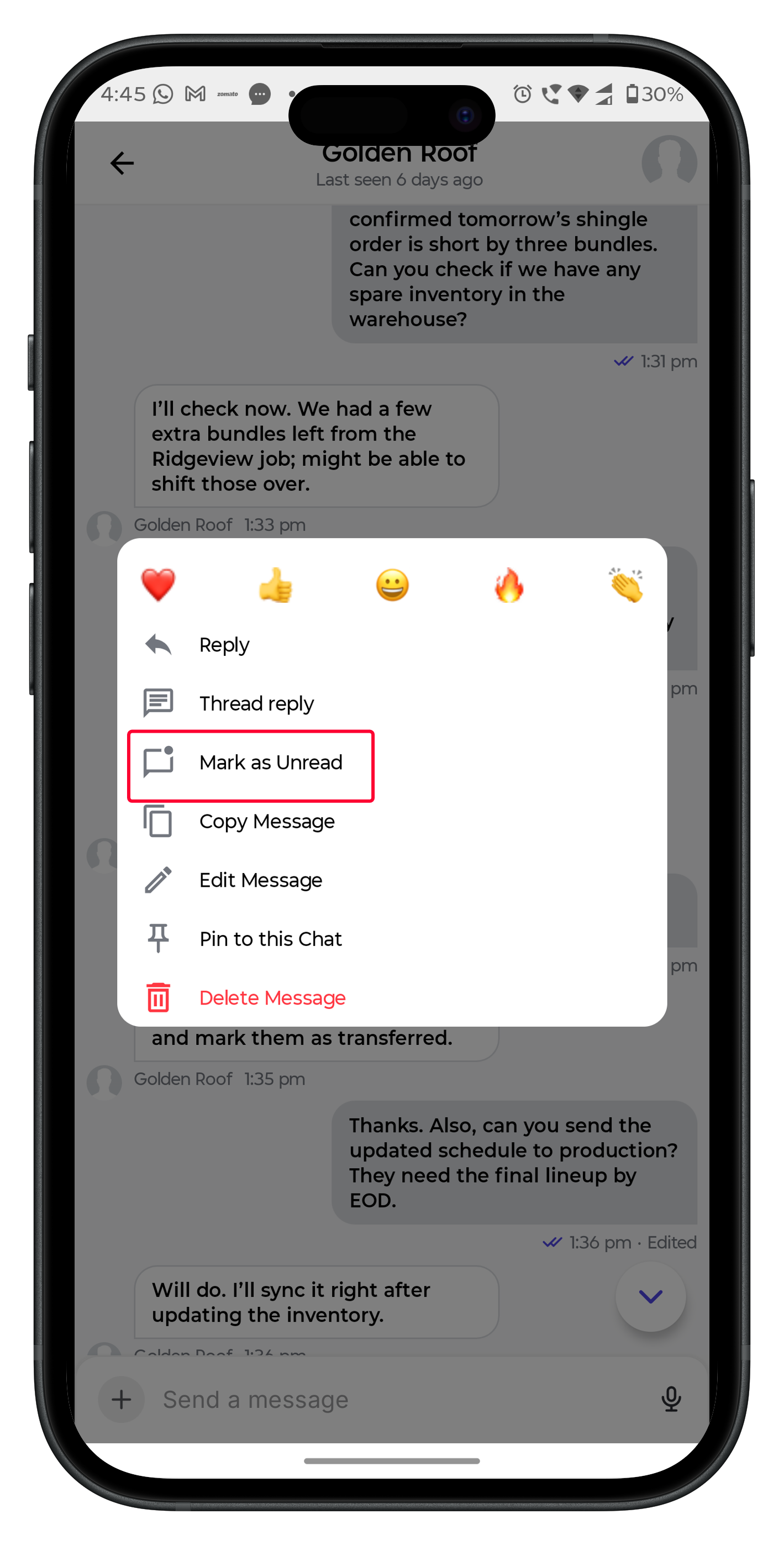
Mark as unread
Flag messages to review later (thread replies excluded).- Web
- Mobile
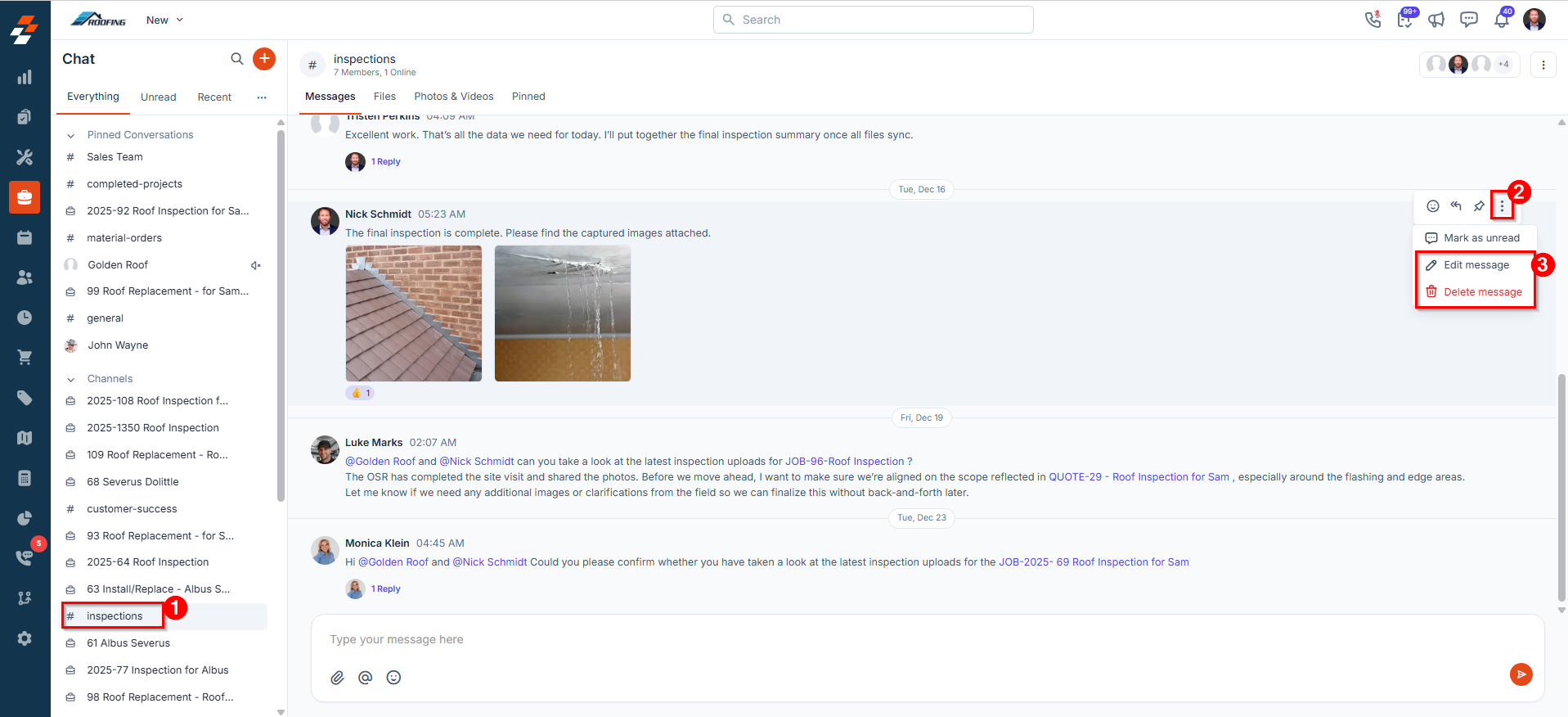
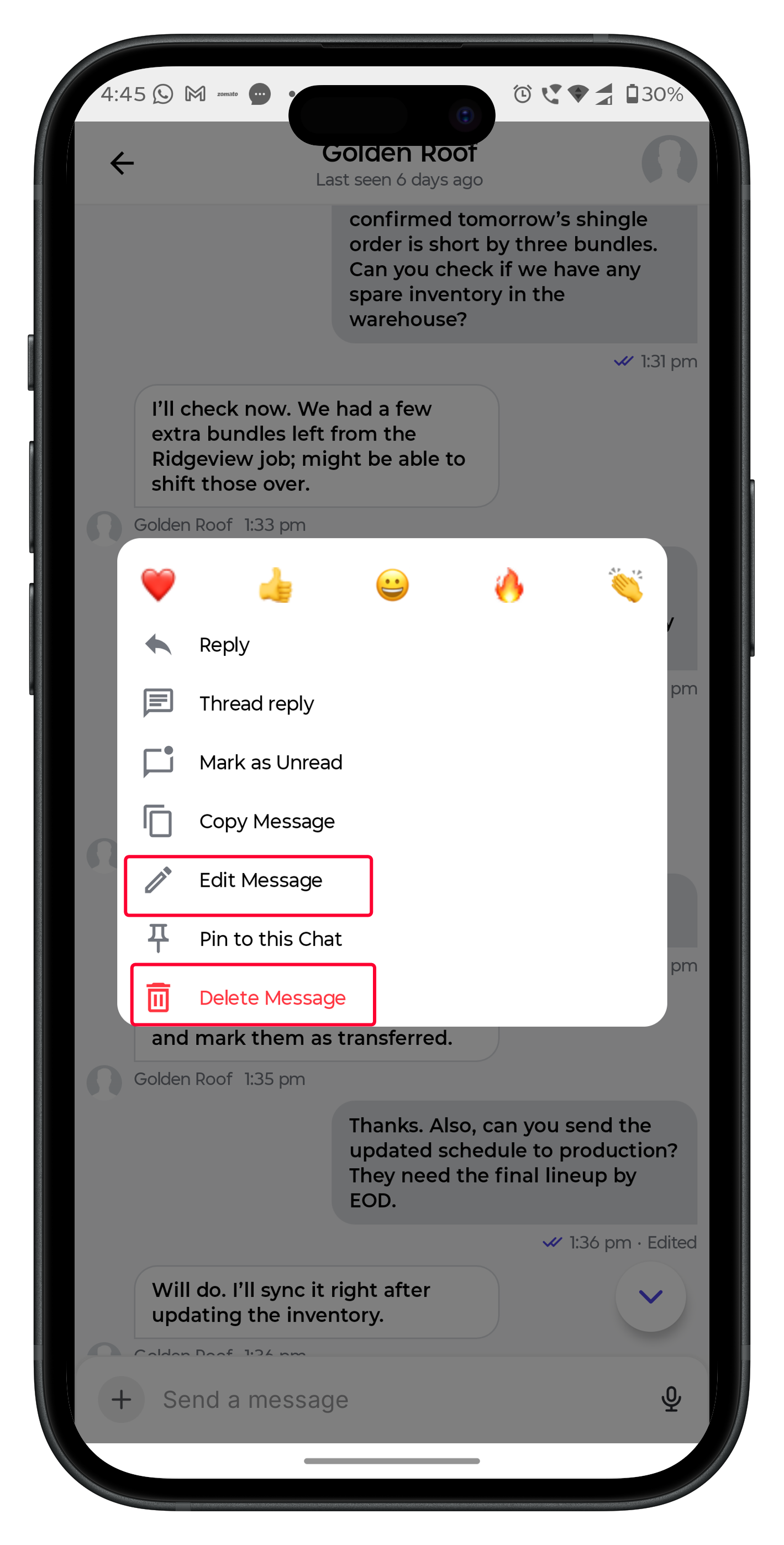
Edit/Delete Messages:
- Users: Can edit/delete their own messages.
- Channel Managers: Can delete others’ messages (but can’t edit them).
- Web
- Mobile
Search
Quickly locate content:- Search across Messages, Users, and Channels.
- Sort message results by creation date.
- Filter message results by sender or channel.
- Web
- Mobile
- Channels
Learn how to create, manage, and collaborate with your team using channels. - Direct Messages
Learn how to start and manage private conversations with individuals. - Messages
Learn how to send, receive, and organize messages effectively. - Search
Learn how to quickly find messages, channels, and conversations using search.